And speaking of Summicrons, Thorsten Overgaard has a wonderful (and long) interview with Leica lens designer, Peter Karbe, that is well worth the read.
Thorsten Overgaard: Leica 50mm APO-Summicron-M ASPH f/2.0

Your Custom Text Here
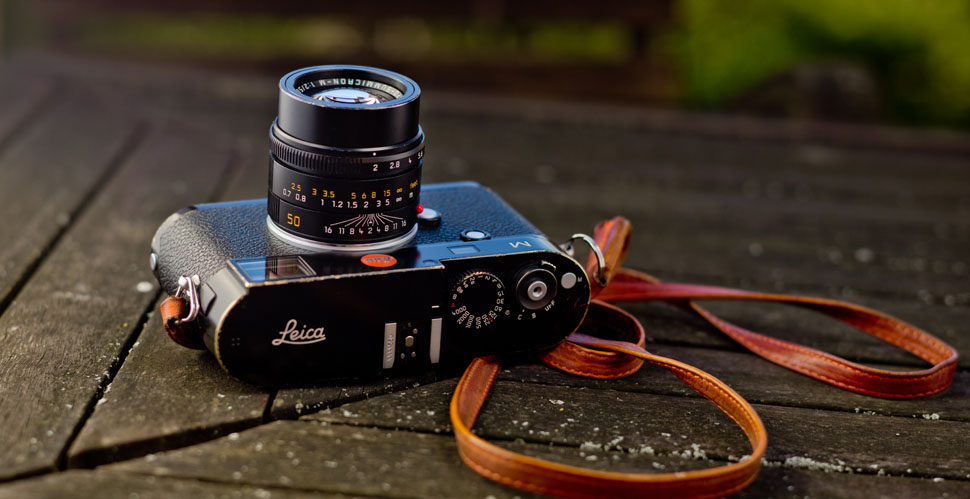
And speaking of Summicrons, Thorsten Overgaard has a wonderful (and long) interview with Leica lens designer, Peter Karbe, that is well worth the read.
Thorsten Overgaard: Leica 50mm APO-Summicron-M ASPH f/2.0

Summicron-M 90 (pre-ASPH)
I always miss sakura season. But this year, my wife and I spent two meals under the cherry blossoms, once with knäckebrot and cheese and wine, once with Japanese fried chicken and rice noodles and beer.
Read more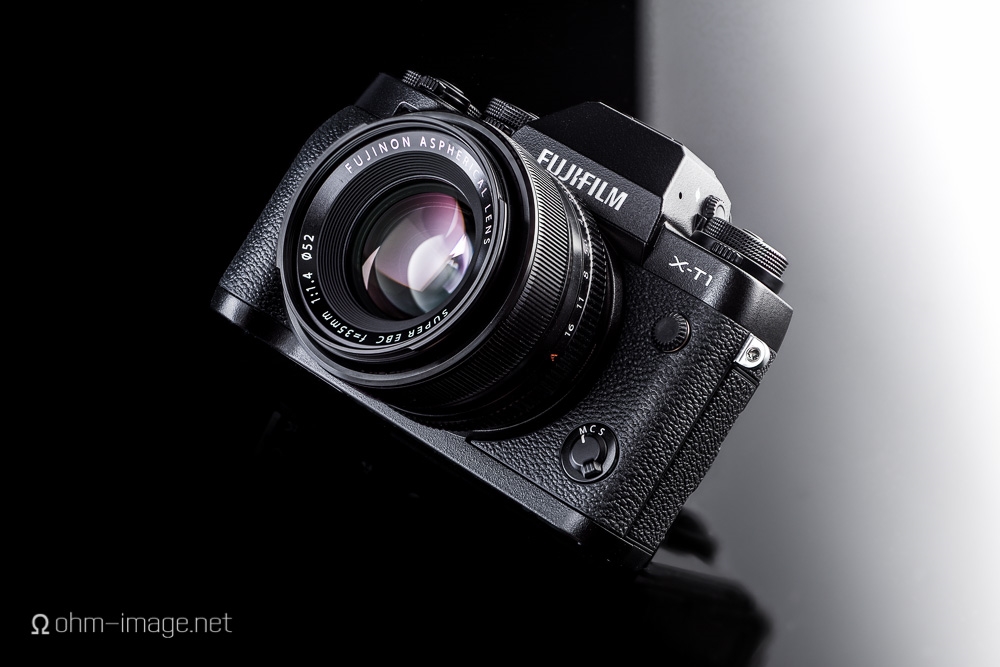
DPReview member oracle82 writes:
“I know this is a frequent issue, the 35 1.4 vs 23 1.4... but I’ve been wondering about the issue of subject separation with the two. I know that the 35 will have more of a compression factor given the longer focal length. But, I seem to have gone from a 50mm equivalent shooter to more of a 35/40mm equivalent shooter recently. I just prefer the slightly wider view now, and find the 35 to be a little too narrow these days - even though it was the first prime that I bought with my XT-1.
As such, I don’t use the 35 all that much now, and when I do, I find myself backing up for a bit wider view. Of course, then I start to lose some of the blurred background because my subject ends up being further away from me.
I’m not trying to blur out the backgrounds completely, I have other lenses for that. But I do like a slightly blurred graduation when I am shooting certain things at wider focal lengths. Not portraits, just everyday type of photos.
I’ve been toying for awhile with the idea of selling my 35 for the 23, since I don’t use it a lot. It’s a fantastic lens, I just hate having expensive equipment around that I don’t use much.
I’m wondering if the subject separation from f/1.4-2 would be adequate enough with the 23, especially since I can get closer? As I said, with the 35 I find myself backing off to get more in the frame, so I lose a lot of that shallow depth of field. (I really hope this makes sense). If I want more serious subject separation, I have a legacy 58mm that I can use.”
And the award for most confusing answer goes to Christof21 who supplied the link to a website called How Much Blur, which compares the theoretical percentage of blur captured by both lenses at similar distances.
But the question specifically addressed the separation of subject and background at different camera to subject distances. In other words, supplying a link, no matter how erudite it may seem, isn't enough. Relevance is key.
The best response from the same thread attempts to answer the question asked, which distilled simply is this:
I like to shoot [people or other objects] at wider angles. Because of this I have to move farther from my subject when using the 35mm 1,4, which reduces the amount of separation between the subject and the background. Which lens, the 23mm 1,4 or the 35mm 1,4, would return more separation between the subject and the background?
The answer lies in the oracle82's own question: Of course, then I start to lose some of the blurred background because my subject ends up being further away from me.
Any answer concerned with the amount to which a background is blurred and not the degree to which the subject and the background are delineated one from another, is pointless. And so becomes the 35mm's f/1,4 aperture when the subject is moved closer to the background in order to capture a wider view.
The answer is: no, you are not.
The 23mm 1,4 lens will more keenly separate the background from the subject.
Here is the thread: Am I wrong in thinking I could get MORE subject separation with 23 vs 35?
Some of us are into sharpness. Some of us are into OOF rendering. Some of us are into bokeh. Others, are into radiation.

Update: I have written more about this lens here: Nagano, Japan: through the Summicron 50.
Formerly I owned the V4 and V5 50mm Summicrons. Both lenses were slightly sharper than the V3 and better built. But both also showed harsher OOF highlights, which grinned my gears. Despite being more compact, the V3 similar focus ergonomics to the V5, but it is light like the V4.
For some reason it is less popular than the V4. My wallet is glad.
Being an older lens, I didn't expect so much contrast and quick falloffs to black, but the V3 surprises. It is also extremely quick to focus. I am able to focus it almost as quickly as I can the 50/2 Nikon Ai lens on a large-viewfinder SLR camera. I suspect the slight delays inherent in focusing the M240 and V3 Summicron and the D800 or FM and 50/2 Ai are down to my prescription.
I must upgrade that.
For the past half year, I've been using a single lens for about 99% of my work. That lens is 100mm and has an f-stop of f/5,6. It's from the tongue-twisting company in this video.
Thanks Thomas Tsai Photography.

From left: Canon 35/1,5 LTM; Leica Summilux 35 ASPH; Fujifilm XF35/1,4R
Despite looking dead-sexy on a Leica M240, the 35mm f/1,5 LTM Canon, aka "Japanese Summilux" isn't the Canon I fell in love with. I fell in love with the 35mm f/2 LTM Canon, aka "Japanese Summicron", about which I wrote this ohmage.
Read more
Clockwise from bottom: Leica M (240) + Canon 50/1,4 LTM, Nikon FE + Nikkor 50/2 Ai, Fujifilm X-T1 + 35/1,4 XF
APS-C’s biggest advantage over FF isn’t size. It is reach. An APS-C camea cocked into a 200mm lens frames subjects similar to a FF sensor cocked into a 300mm lens, but it can focus in closer to a subject. Similarly, an APS-C sensor cocked into a 35mm frames subjects similar to a FF sensor cocked into a ~50mm lens, and it nearly halves the minimum focus distance.
Read more
Another day, another super-speed lens promised for X-mount. This time, however, that lens comes assembled in the fatherland. Thanks to X-mount's APS-C sensor, this hulk of a lens (680g) will achieve the field of view and depth-of-focus similar to that of a FF ~50mm f/1,4 lens on a FF camera.
Small sensor cameras can be small. Equivalent lenses never are.
More information: Nocturnus F 0,95 35mm
This news comes via Fujirumors

Today, Fujifilm announced a new 35mm XF R lens, whose f/2 aperture allows it to slim down from the fatty dimensions of its forebear. It looks great. It even more closely matches the rangefinder trappings of the X-Pro 1 and X-E series. This will be a first among the XF lens series. It will also be the first XF prime lens to bear marketing copy re: water resistance.
Funnily, however, Fujifilm X World have billed it as 'Compact & Thin', or alienated a majority of lenses in the XF line, all of which Fujifilm's inexpert advertising copy team bill like so:
“Compact Size, Lightweight, and Overall Feel, All Aimed at Producing Premium Image Quality and Unique Creations”
So which is it? Is it the new lens or the old lens that is compact? Fujifilm's original copy suggests that the two XF R lenses are being pitted, one against the other.
The takeaway: Fujifilm either mis-marketed, or lied re: the original 35mm, which isn't any more compact than its FF analogue.
The good news is that that doesn't matter. With the release of the new XF 35/2 R lens, finally, faux-rangefinder X series cameras will have a fast, fully-featured, and compact, normal lens that does their styling, not to mention, size right. That said, the lighter of the two (they come in silver and black) has that hideous green tinge that all modern 'silver' lenses have.
The new 35mm lens shows up on Fujifilm's lens X Mount Road Map.
Source: Fujifilm X World
via: Fujirumors
Tsukuba, Japan